By Boluwatife Gbede
As remote work continues to reshape the global job market, young professionals are increasingly exploring opportunities that allow them to work from anywhere.
From tech startups to global organizations, many companies now operate with distributed teams, creating new opportunities for individuals to earn, collaborate, and build international careers without leaving their home countries.
However, landing and succeeding in a remote job requires more than technical knowledge. It also demands familiarity with the digital tools that power modern remote workplaces. Understanding these tools can significantly improve a candidate’s ability to communicate, manage tasks, and stay productive while working with teams across different time zones.
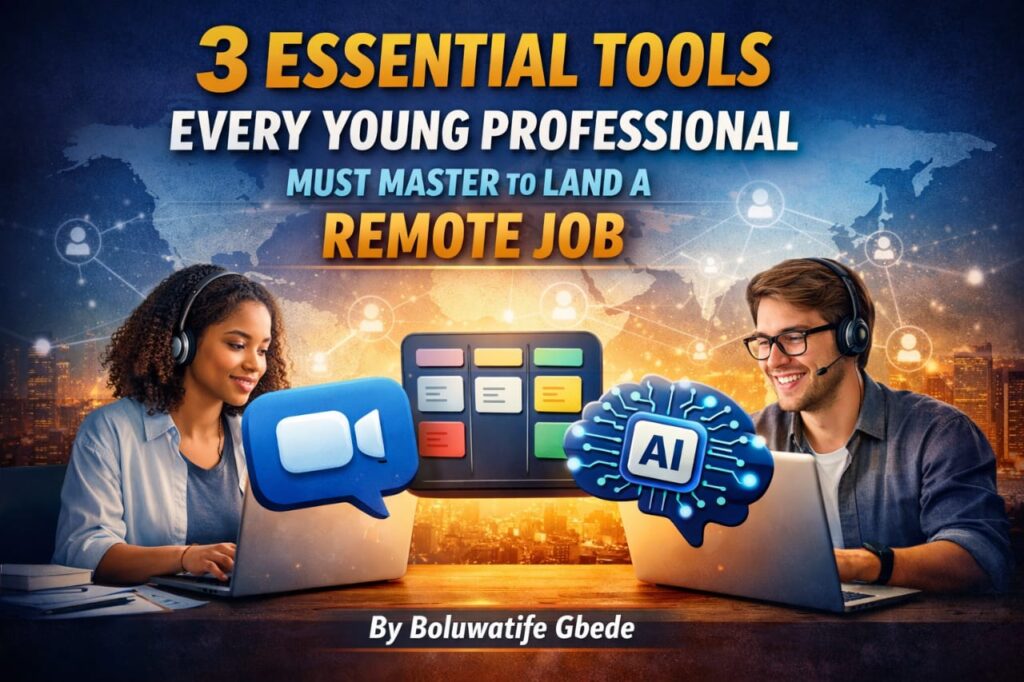
Below are three essential tools every young professional must master to land a remote job and succeed in the digital workplace.
Communication Tools – The Backbone of Remote Teams
In traditional office environments, communication often happens face-to-face. In remote teams, however, digital communication platforms serve as the primary way colleagues interact, share updates, and collaborate on projects.
Tools such as Slack, Microsoft Teams, Zoom, Google Meet, and Discord have become standard communication channels for remote organizations.
Slack and Microsoft Teams are widely used for instant messaging, internal updates, and team coordination. These platforms allow workers to organize conversations into channels dedicated to specific teams, projects, or topics.
Video conferencing tools like Zoom and Google Meet enable remote teams to hold meetings, conduct presentations, and participate in virtual training sessions. Meanwhile, Discord, which gained popularity within gaming communities, is increasingly being adopted by startups and creative teams for real-time collaboration.
For remote job seekers, becoming comfortable with these communication tools can demonstrate readiness to work effectively in distributed work environments.
Project Management Tools – Keeping Remote Work Organized
Project management platforms play a crucial role in helping remote teams stay organized and productive. These tools allow managers and team members to track tasks, monitor progress, and ensure deadlines are met.
Popular project management tools include Asana, Trello, ClickUp, Monday, and Notion.
Trello uses a visual board system that allows users to move tasks across different stages of completion. Asana and ClickUp offer more advanced project tracking features such as timelines, task dependencies, and workflow automation.
Notion combines project management with documentation, allowing teams to store information, collaborate on ideas, and manage tasks within a single workspace.
For young professionals seeking remote work opportunities, learning how to navigate these platforms can improve efficiency, collaboration, and accountability.
Artificial Intelligence Tools – The New Workplace Assistants
Artificial intelligence is rapidly transforming the modern workplace. Many professionals now rely on AI tools to assist with research, writing, brainstorming ideas, and automating repetitive tasks.
Popular AI tools used by remote workers include ChatGPT, Claude, Perplexity, and Gemini.
These tools help professionals draft emails, summarize documents, generate creative ideas, analyze data, and solve complex problems more efficiently. For professionals in fields such as content creation, marketing, software development, and research, AI assistants are becoming everyday productivity partners.
As organizations increasingly adopt AI-powered workflows, familiarity with these tools is quickly becoming a valuable advantage for job seekers.
Preparing for the Future of Remote Work
The rise of remote work has opened new doors for young professionals worldwide, particularly in countries where access to global job markets was previously limited.
With the right digital skills and familiarity with workplace tools, individuals can compete for international opportunities and collaborate with teams across continents.
While technical expertise remains important, employers are increasingly looking for candidates who can communicate effectively, manage tasks independently, and adapt to digital collaboration environments.
For aspiring remote workers, mastering communication platforms, project management systems, and artificial intelligence tools can be the first step toward building a successful career in the global digital economy.
As remote work continues to expand, young professionals who invest time in learning these essential tools will be better positioned to secure remote job opportunities and thrive in the future of work.